
Stump Grinding vs. Stump Removal: Which Do You Actually Need?
Almost every tree service in Rhode Island advertises stump grinding. Very few explain what it is, how it differs from full stump removal, or why the price gap between them is so wide.
The distinction matters, because picking the wrong one means either overpaying by hundreds of dollars or discovering next spring that you can't plant where you wanted to.
What Stump Grinding Actually Does
A stump grinder uses a rotating cutting wheel to chew the stump into chips, working from the top down. A typical grind goes 6 to 12 inches below grade, deep enough to plant grass, lay sod, or spread mulch over the spot.
What stays in the ground is the root system. Those roots are cut off from the canopy that fed them, so they stop growing and slowly decay over several years.
Grinding is faster, cheaper, and far less disruptive. The machine works in a compact footprint and leaves your lawn largely intact — the reason it's the right call for most residential stump grinding jobs.
What Full Stump Removal Involves
Full removal means excavating the stump and the major root plate, usually with a backhoe or excavator.
You end up with a crater — often four to eight feet across and several feet deep — that has to be backfilled and compacted. Equipment access is required, and lawn damage is close to unavoidable.
It costs substantially more, sometimes three to five times a comparable grind. But it's the correct choice in specific situations.
How to Choose
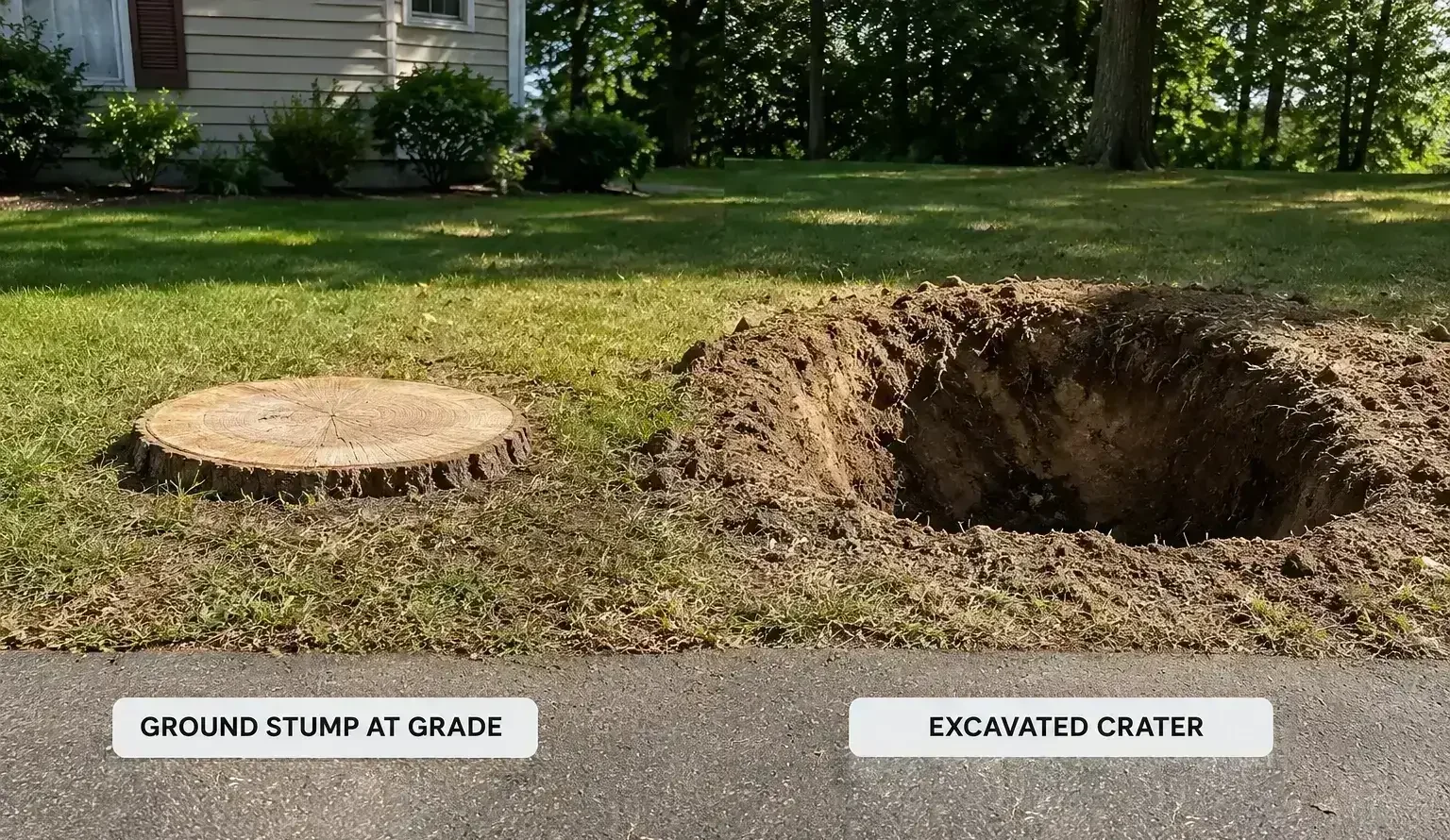
Choose grinding when you want to:
Reseed or sod over the area
Plant shallow-rooted shrubs or perennials nearby
Eliminate a tripping hazard or mower obstacle
Improve appearance without disturbing the yard
Choose full removal when you plan to:
Pour a foundation, patio, or driveway over the location
Install a fence post or in-ground pool in that spot
Plant a new tree in exactly the same position
Excavate for septic, drainage, or utilities
That last one deserves emphasis. Homeowners routinely grind a stump, wait a year, then try to plant a replacement tree in the same hole and hit a wall of remaining root mass. If a new tree is going back in the same place, offset it several feet or budget for full removal.
Two Things Nobody Mentions
The chips. A single grind produces a surprising volume of mixed wood chips and soil. Confirm whether your contractor hauls them away or leaves the pile. It's a common source of post-job frustration and it's worth asking about alongside any brush chipping and debris cleanup.
Decay organisms. Decaying roots can support fungi such as Armillaria and attract carpenter ants. Neither is usually a threat to a healthy home, but if the stump sits within a few feet of your foundation or a wood structure, mention it — that's a point in favor of full removal. The International Society of Arboriculture's tree owner resources cover root and decay issues in more depth.
FAQ
-
Typically 6 to 12 inches below grade — enough for turf or mulch, not enough for construction.
-
Not in the exact spot. Offset several feet, or opt for full excavation.
-
Yes. Cut off from the canopy, the roots stop growing and decay over several years.
-
Grinding, by a wide margin. Cost scales with stump diameter, wood hardness, and access.
Not sure which your project calls for? Get a free on-site estimate — we'll look at what you're planning for the space and recommend the option that actually fits.