
10 Signs a Tree on Your Property Is Dangerous
Most trees that fail in South County gave warning first. The signs were there for months or years — they just weren't recognized.
Here's what to look for. Walk your property with this list once a year, ideally in early spring before the canopy leafs out and hides the structure.
1. Fungal Conks at the Base
Shelf-like mushrooms growing on the trunk or root flare are the visible fruiting body of a fungus already decaying wood inside. By the time conks appear, internal decay is usually well advanced. This is one of the more serious findings on the list.
2. A Heaving or Cracked Root Plate
Look for soil lifting, cracking, or mounding on one side of the trunk. That means roots are tearing and the tree is beginning to lever out of the ground. A heaving root plate after a windstorm warrants same-week attention.
3. Codominant Stems with Included Bark
Where a trunk splits into two roughly equal leaders forming a tight V, bark often gets trapped in the union instead of wood knitting together. These unions are structurally weak and split under snow load or wind — a very common failure in mature RI maples.
4. Deadwood in the Upper Canopy
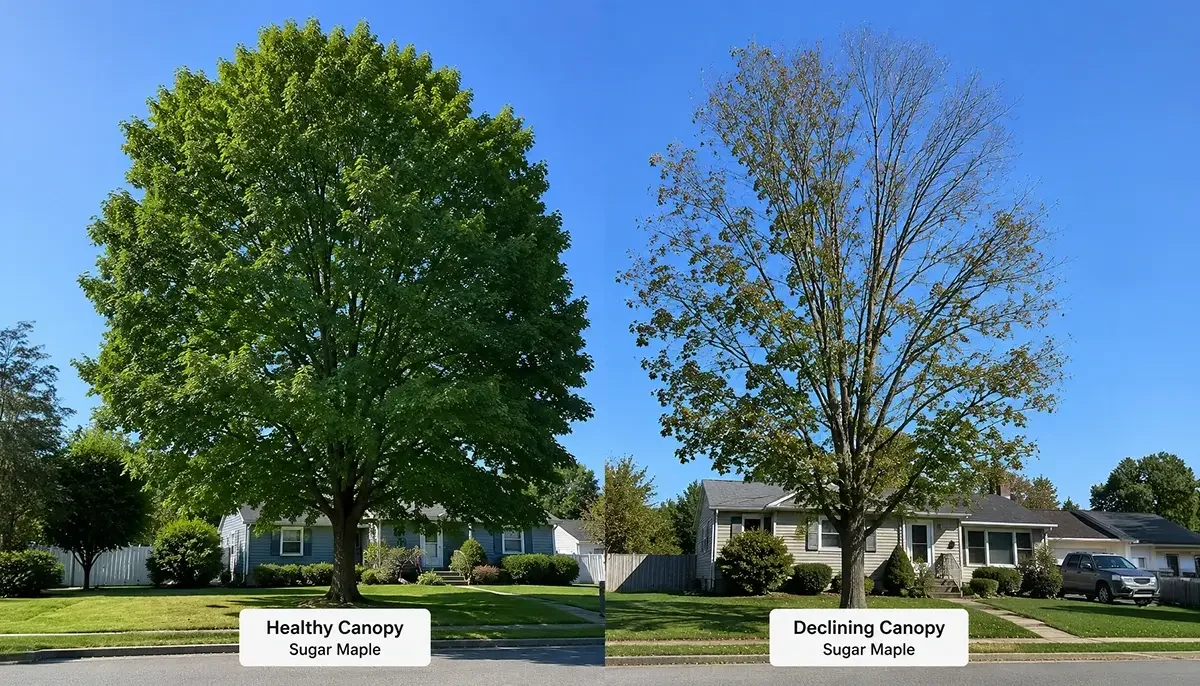
Bare branches high in an otherwise leafy crown signal decline. Individual dead limbs are a falling hazard on their own and can often be addressed with selective pruning rather than removal.
5. Cavities and Hollows
A hollow trunk isn't automatically fatal — trees can carry substantial hollowing and stand fine. What matters is the ratio of sound wood shell to opening. When the remaining shell thins past roughly a third of the radius, risk climbs sharply.
6. Vertical Trunk Cracks
Deep seams running up and down the trunk indicate the tree is already failing structurally. Cracks that pass through to a cavity are especially concerning.
7. A Sudden Lean
Trees that grew at an angle their whole lives are usually stable — they've built reaction wood to compensate. A tree that recently began leaning is a different matter. Fresh soil disturbance on the uphill side is the tell.
8. Bark Falling Off in Sheets
Missing bark over a large area means the cambium beneath has died. Combined with fungal growth or insect exit holes, it indicates a tree well into decline.
9. Sawdust or Frass at the Base
Fine sawdust piles suggest wood-boring insects or carpenter ants actively working inside the trunk — a sign that internal decay has been underway long enough to attract them.
10. Construction Damage Within the Last Few Years
Trenching, regrading, or driving heavy equipment over the root zone kills roots and compacts soil. The tree often looks fine for two to five years, then declines rapidly. If you've had work done near a mature tree, watch it closely.
What to Do With What You Find
One item on this list isn't a verdict. Several together, especially on a tree within falling distance of your house, driveway, or a neighbor's property, means it's time for a professional look.
The International Society of Arboriculture publishes a free homeowner guide to recognizing tree risk if you want to read further.
Photograph anything concerning and note the date. That documentation matters if the tree later fails and questions of negligence come up.
Not every hazardous tree needs to come down — cabling, bracing, and crown reduction save trees that would otherwise be removed. But when removal is the right call, doing it on your schedule always costs less than doing it after a storm.
Concerned about a tree on your property? Request a free assessment. We'll tell you honestly whether it needs to go or can be saved.