
Do You Need a Permit to Remove a Tree in Rhode Island?
The short answer surprises most people: if a tree stands entirely on your own private property in Rhode Island, you generally do not need a permit to remove it.
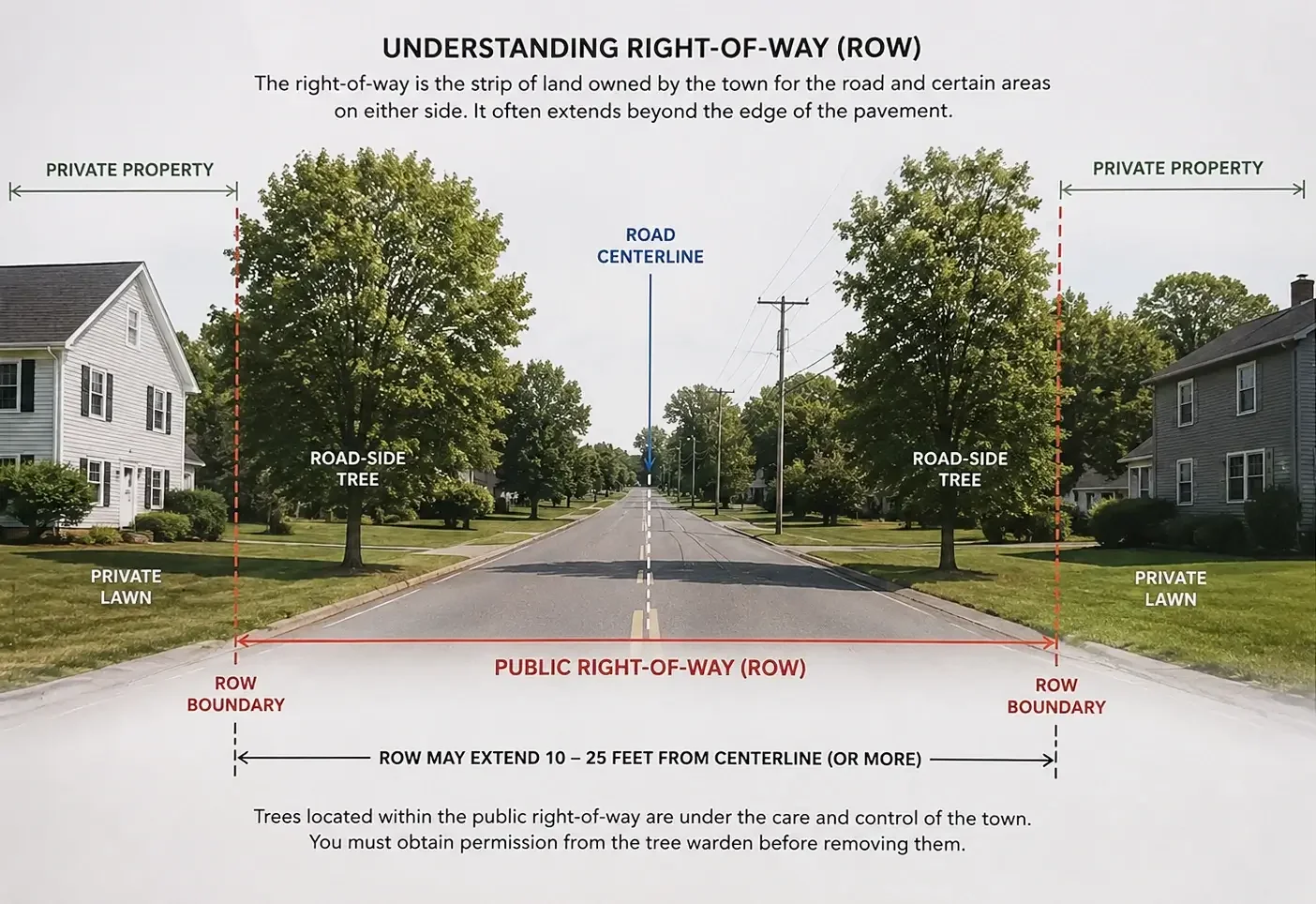
Where homeowners get into expensive trouble is the strip of land between the lawn and the pavement — the town right-of-way. That maple you've mowed around for twenty years may not legally be yours, and cutting it without approval can mean fines plus a replanting obligation.
The Line That Matters: Public vs. Private
Rhode Island law requires every city and town to appoint a tree warden. Under R.I. General Laws § 2-14-1 et seq., that official has care and control of trees on public land and public rights-of-way — including the portions of private trees that extend over a public road.
Separately, § 2-15-8 requires written permission from the tree warden before anyone cuts or removes a public shade or ornamental tree. That statute also carries a replacement requirement: remove or substantially damage a public tree and you must replace it with trees whose combined diameter equals twice the diameter of what came down.
Utility crews working under an approved vegetation management program are exempt. Homeowners and their contractors are not.
Where the Right-of-Way Actually Begins
This is the part almost everyone gets wrong. Property lines rarely stop at the edge of the lawn. In many South County neighborhoods the town right-of-way extends 10 to 25 feet from the centerline of the road, which can place a mature roadside tree squarely on public land.
Before any tree removal work near a road, check your plat map or call the town. It takes ten minutes and can save you a fine.
Town-by-Town Rules
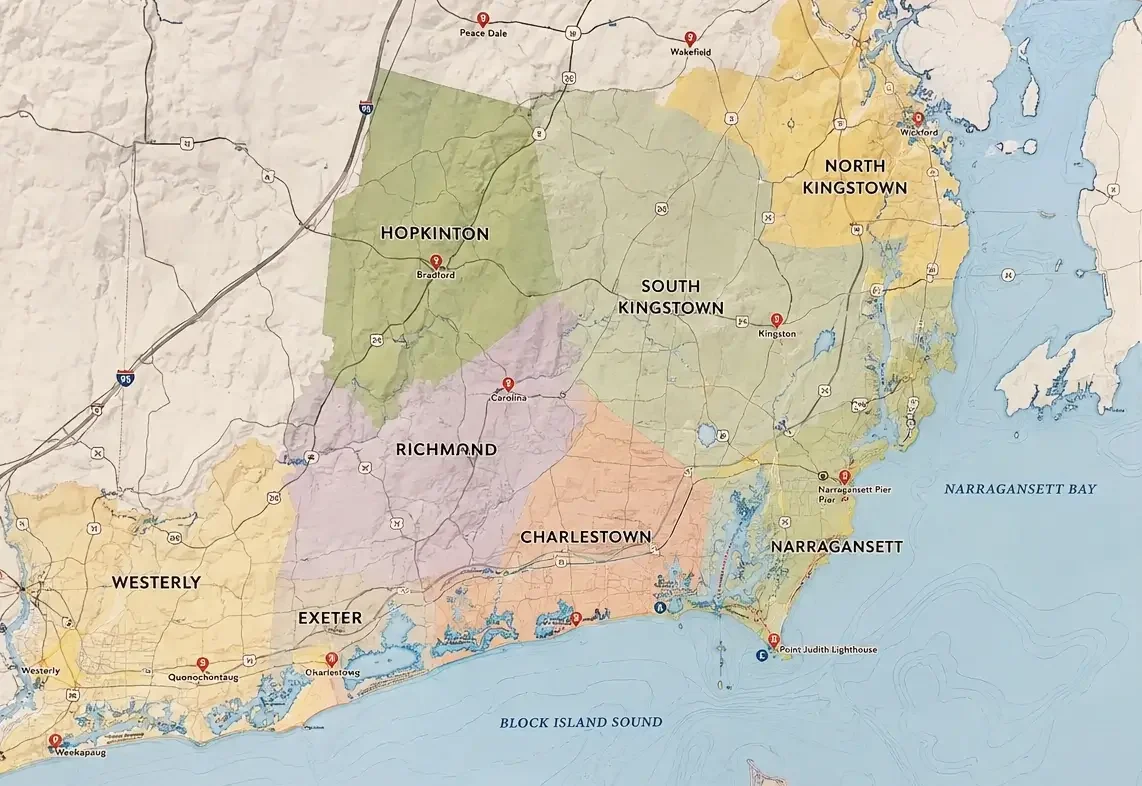
South Kingstown — Chapter 18.5 of the Town Code. A permit is required before any pruning, trimming, or removal within the town right-of-way, and all municipal tree work must be performed by a Rhode Island Licensed Arborist. Expect Tree Warden posting and possibly a hearing before the Tree Board.
Narragansett — The street tree ordinance requires the tree warden and property owner to agree that no street tree or neighbor's tree sits in the proposed clearing area before a clearing permit issues. If they can't agree, the owner must post surveyed boundaries endorsed by a registered surveyor.
Jamestown — Right-of-way trees larger than 1.5-inch caliper need Tree Warden approval. Removal for view improvement is not allowed and topping is prohibited, with a $500-per-tree fine for unpermitted work. No permit is needed on private land.
Exeter, North Kingstown, Charlestown, and Westerly — Rules vary and change. Call the town before cutting anything near a road.
Wetlands and Coastal Property
Private-land freedom has limits. RIDEM regulates freshwater wetlands and their vegetated buffers, and CRMC governs coastal zones. Clearing inside a buffer can require review even on land you own outright — something to confirm early if you're planning land clearing for a building lot.
FAQ
-
Generally no, assuming the tree is fully on your property and outside any regulated wetland or coastal buffer.
-
Every RI municipality is required to have one, and they must be a licensed arborist. Contact your town's DPW or Planning Department.
-
Trees straddling a boundary are typically jointly owned. Get written agreement from your neighbor before any work begins.
-
You may face municipal fines and a statutory replacement obligation of twice the removed tree's diameter.
Not sure which side of the line your tree falls on? Request a free estimate and we'll help you sort out the permitting before a saw ever comes out.
This article is general information, not legal advice. Confirm current requirements with your town.