
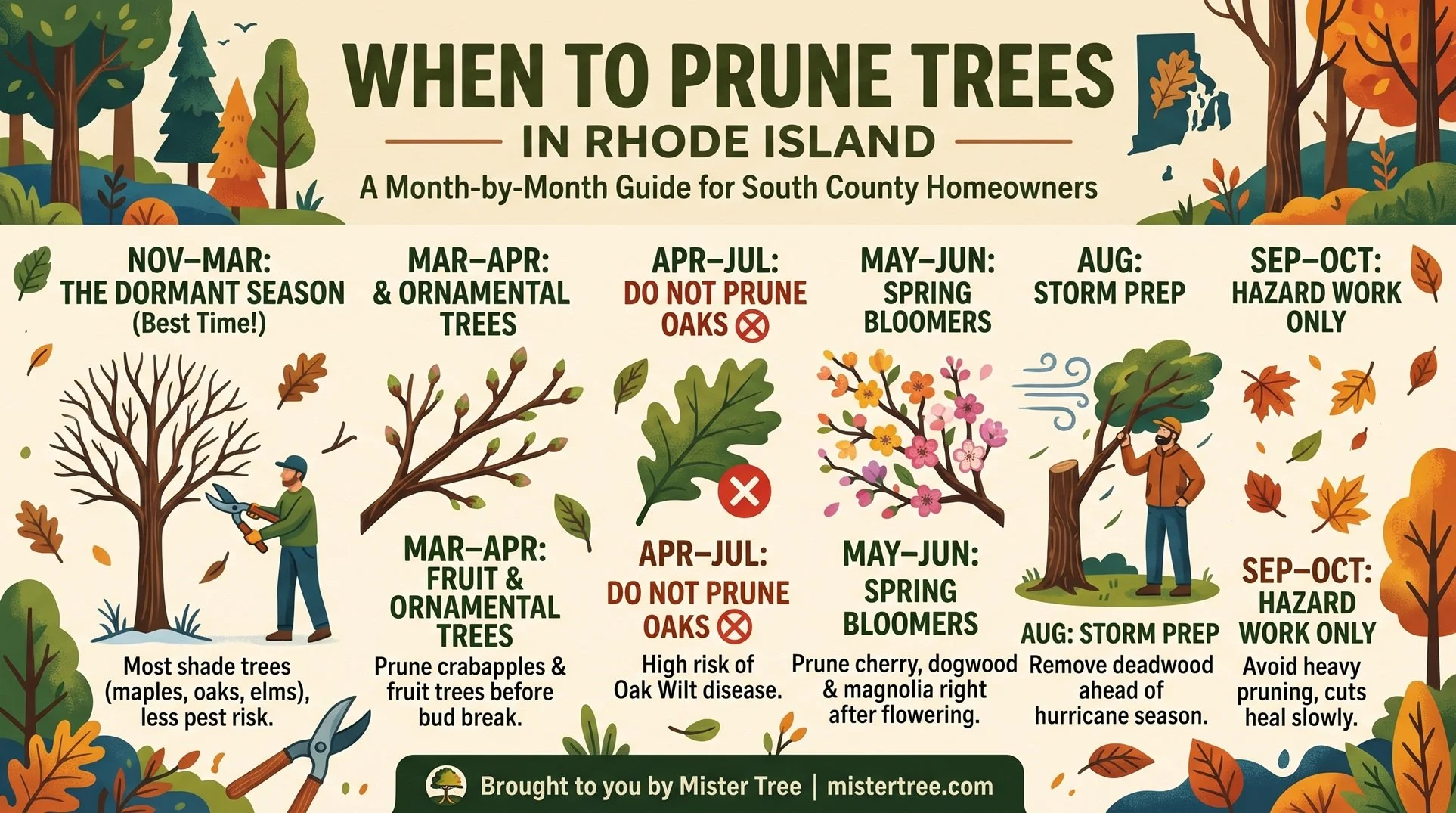
November through March: dormant season
This is when we do most of our RI tree pruning jobs, and for good reason. With the leaves down, an arborist can see the whole branch structure: crossing limbs, weak unions, deadwood hiding in the crown. Insects and fungal spores are mostly inactive, so fresh cuts aren't an open door to disease. And the tree has the spring growth flush ready to start sealing wounds. Trees stressed by drought or past insect defoliation benefit most, because they aren't spending energy on leaves when the cuts are made.
Late winter, February and March, is the sweet spot for structural pruning on young trees. Frozen ground also makes it easier to get equipment onto lawns without rutting them.
April through July: leave the oaks alone
Oak wilt is a fungal disease that spreads through fresh pruning wounds in spring and early summer, carried by sap beetles drawn to the cuts. RI DEM lists it as not yet found in Rhode Island, but it has turned up on Long Island, and neighboring Connecticut's Agricultural Experiment Station advises: do not prune oak trees from April to July. With oaks dominating South County woodlots, we follow that rule on every job.
If an oak limb breaks in a storm during that window, it still needs to come off. We make a clean cut and treat the wound right away.
Spring bloomers: prune right after flowering
Cherries, dogwoods, magnolias and lilacs set next year's flower buds over the summer. Prune them in winter and you cut off the spring show. The right time is within a few weeks after they finish blooming.
Crabapples and ornamental pears are the exception. They're prone to fire blight, so we prune them in late winter, before buds open.
Maples and birch: the "bleeders"
Maples, birches and walnuts drip sap heavily when cut in late winter. It looks alarming but rarely hurts the tree. If you'd rather avoid it, light pruning in early summer, once leaves are fully out, works too.
August: storm prep
Removing deadwood and thinning dense crowns before September's hurricane peak is time well spent, especially along the coast in Narragansett, Charlestown and Westerly. Deadwood can come out any month of the year. Learn the warning signs of a dangerous tree and what to do if one comes down in a storm.
Fall: hold off on heavy pruning
Cuts made in September and October heal slowly going into winter, and decay fungi are still releasing spores. Unless a limb is a hazard, wait until the leaves drop and the dormant season starts again.
Book dormant-season work early
Our winter schedule fills up fast once the leaves come down. Mister Tree's arborist can walk your property, flag what needs attention now and what can wait, and build a plan by species. Request a free estimate or learn more about our tree pruning service in Exeter, North Kingstown, South Kingstown and across South County.
FAQs
What is the best time to prune trees in Rhode Island? For most shade trees, the dormant season from November through March. Late winter, February and March, is ideal for structural pruning. Spring-flowering trees are the main exception and should be pruned right after they bloom.
When should you not prune oak trees in Rhode Island? Avoid pruning oaks from April through July. Fresh wounds during that window can attract the beetles that spread oak wilt. Oak wilt has not been found in Rhode Island, but it has been found on Long Island, and regional agencies recommend the same April-to-July rule.
Is it bad to prune maples in late winter when they drip sap? Usually not. Maples, birches and walnuts "bleed" sap when cut in late winter, but it rarely harms the tree. Light pruning in early summer, after leaves are fully out, avoids the dripping.
Can dead or dangerous branches be removed any time of year? Yes. Dead, broken or hazardous limbs can and should be removed in any season, including oaks during April through July, with a clean cut made promptly.